
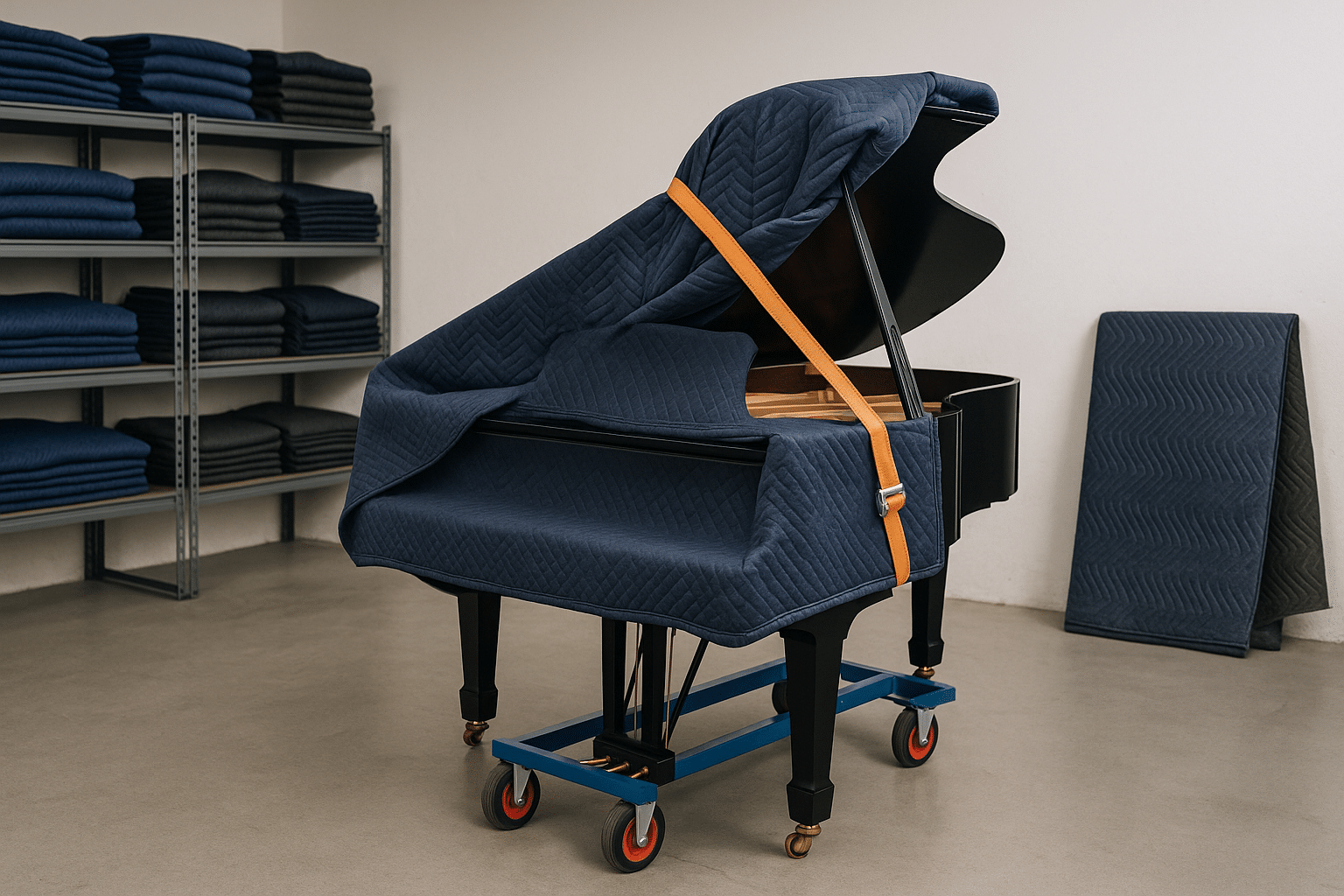
Moving a piano is one of those jobs that looks doable on a Saturday morning until you lift the corner and realize gravity has opinions. If you own a Studio Piano in Salt Lake City and you’re thinking about moving it yourself, pause for a second. Utah Piano Movers helps homeowners protect the music, the instrument, and — frankly — their backs. This article explains, in plain language, why hiring professional studio piano movers is usually the smart move.
Why a studio piano is not just a heavy box
Here’s the thing: a studio piano can weigh several hundred pounds, and its value isn’t just monetary. There’s the soundboard, the pin block, the action — all of which are delicate. You can bump a leg and be left with a cosmetic ding, or you can twist a frame and change the instrument’s tuning forever. That difference matters to anyone who plays, collects, or simply loves the presence of a piano in the home.
You know what? People often think, “It’s just wood and strings.” But those strings sit under thousands of pounds of tension. A small drop or a roll across rough flooring can produce damage that shows up weeks later — a buzzing note, a warped case. In short: heavy doesn’t mean simple.
What professional studio piano movers actually do (and why it helps)
Let me explain how the pros work so you see what you’re really paying for. Movers who specialize in pianos bring gear and experience you probably don’t have: skid boards, padded blankets, specialized dollies, straps rated for piano loads, and trucks with secure tie-downs. They know how to navigate stairs, tight corners, and narrow doorways without turning the piano into a project for a luthier.
Key steps pros take:
- Survey first: An on-site look to measure doors, stairs, and access — surprises are reduced.
- Protect everything: Floors, walls, and the piano itself get padding and secure wrapping.
- Use the right tools: Skid boards and piano dollies keep weight distributed; straps prevent slips.
- Controlled lifting: Movers use team techniques to lift and pivot safely; no awkward twisting.
- Insurance & paperwork: If something goes wrong, you’re not left holding the claim.
That list sounds technical — and it is — but for homeowners it’s simple: fewer surprises, less stress, and a much higher chance your piano arrives unscathed.
Cost vs. risk: pay now, or pay later?
Honestly, hiring professionals looks expensive until you consider the alternatives. A scratched case can be sanded, but a cracked soundboard or a shifted pin block can mean months of repair and thousands of dollars. Even tuning after a rough move can cost you repeatedly; some damage never fully recovers.
Think of it this way: would you buy a new roof for a bargain if the old one ripped off in a windstorm? Probably not. Spending on a proper move is like investing in insurance for the instrument — and for your home.
Common questions Salt Lake City homeowners ask
Living in Salt Lake City brings a few local quirks. Older craftsman homes often have narrow staircases. Row houses near University of Utah can have tight corners. Winter moves add snow and ice to the equation. So here are quick answers to things neighbors ask us all the time.
What about stairs and narrow halls? Pros use custom rigging and sometimes remove doors, legs, or casters to fit through tight spots without forcing the issue.
Does moving in winter make it riskier? Yes — cold can stiffen wood and ice makes floors slippery. Professionals use non-slip mats, salt where needed, and climate-aware handling so the piano isn’t stressed by sudden temperature swings.
Will my piano need tuning afterward? Almost always. Moving disturbs tensions. Plan a tuning two weeks after the move — that gives the instrument time to settle.
How to prepare—small things that save time and money
Preparing your home is easy and surprisingly effective. Clear the path from front door to piano. Measure doors and stair widths. Remove rugs that could bunch under heavy loads. If your driveway gets icy, shovel a path or ask the movers to handle it with their equipment.
Simple checklist:
- Measure: Height and width of doors, stair turns, elevator dimensions.
- Clear: Move furniture, take down low-hanging lights, roll up area rugs.
- Protect: Lay down cardboard or rosin paper for hardwood floors if you can.
- Accessibility: Reserve parking near the entrance — a short carry is a friendly carry.
How to pick the right mover — a few practical signs
Not all movers are created equal. Here’s what to look for when you’re comparing companies in Salt Lake City. First, verify they have piano-moving experience. Second, check for insurance and bonding. Third, ask about the gear they use and whether they perform in-person surveys. Finally, read local reviews — ask neighbors, call the studio next door, check community forums like Nextdoor or Yelp.
Quick red flags: vague quotes, no on-site inspection, or crews that say they’ll “figure it out” when they arrive. Confidence is good; overconfidence is not. You want competence, not bravado.
Why choose Utah Piano Movers?
We’re Salt Lake City homeowners, too. We know the narrow turn of an Avenues stair, the hassle of icy driveways in winter, and the relief of seeing a piano set perfectly in its new room. Our focus is moving studio pianos safely, with care for your home and your instrument. We provide in-person estimates, professional packing and padding, climate-aware transport, and insurance for peace of mind.
Ready to stop worrying and get the job done right? Call us at 801-396-7323 or Request a Free Quote online. We’ll schedule a quick survey, explain the plan, and give you a clear price — no surprises, just good moving. Let’s keep the music where it belongs: in your home.


